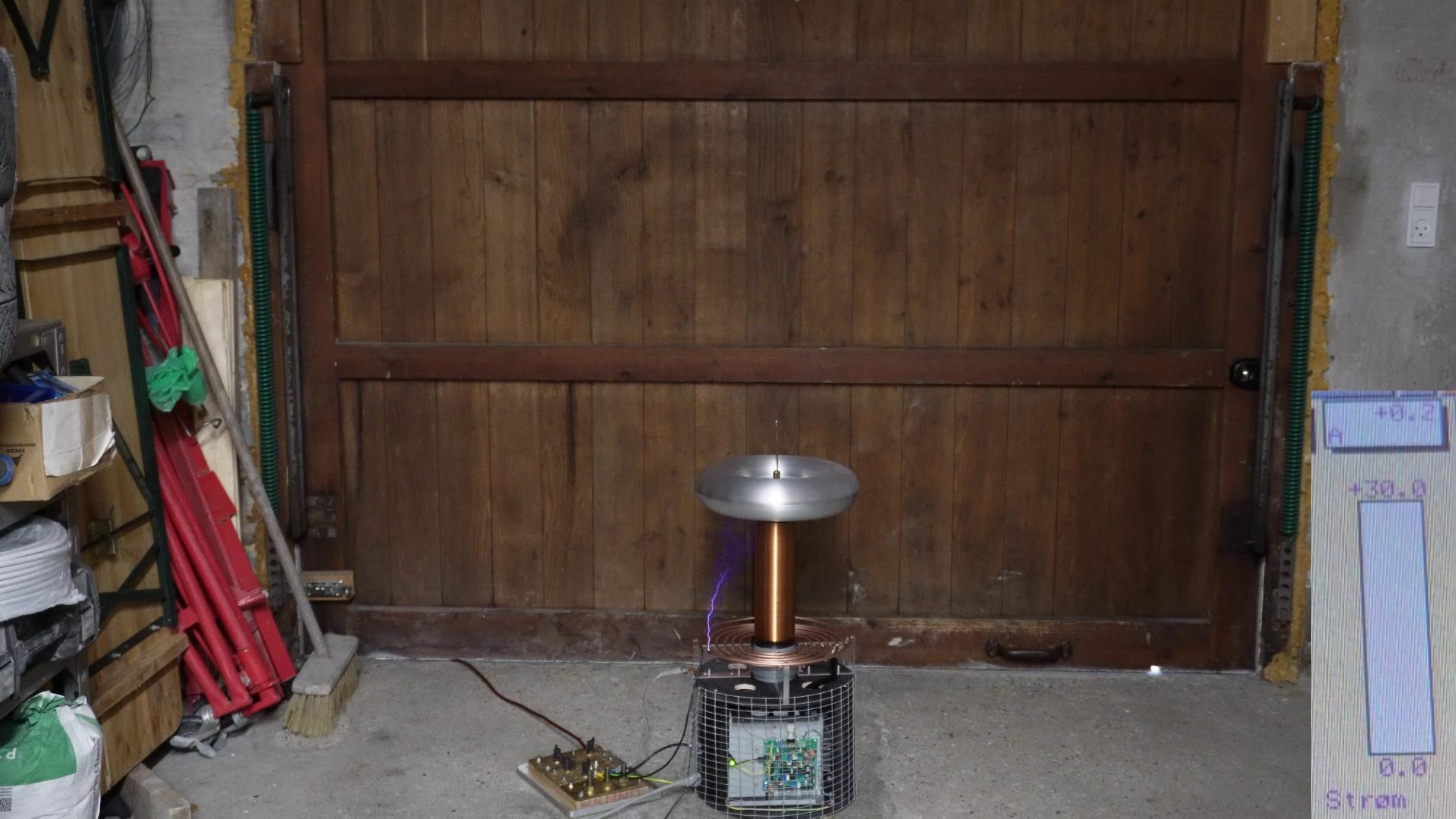
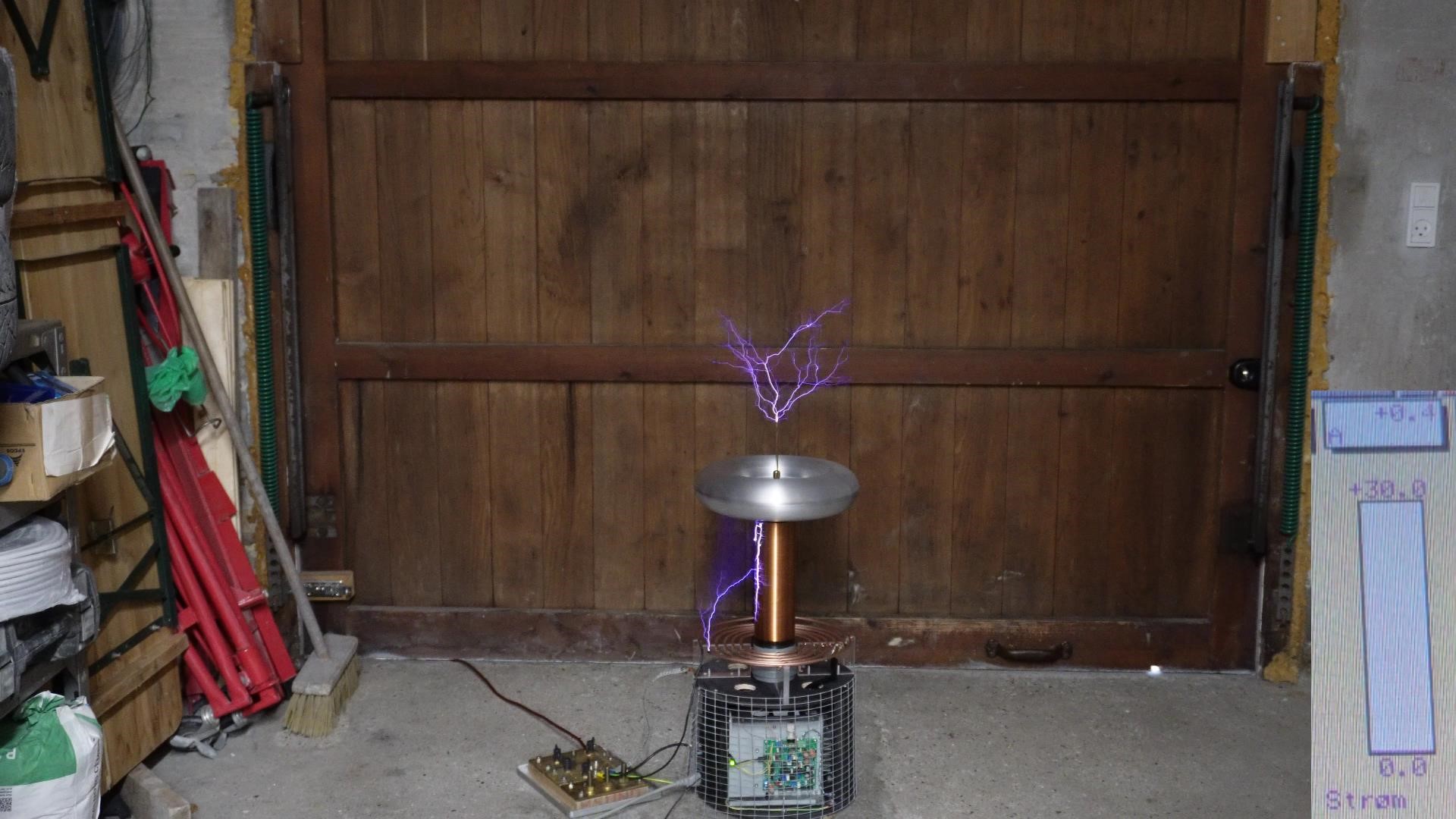
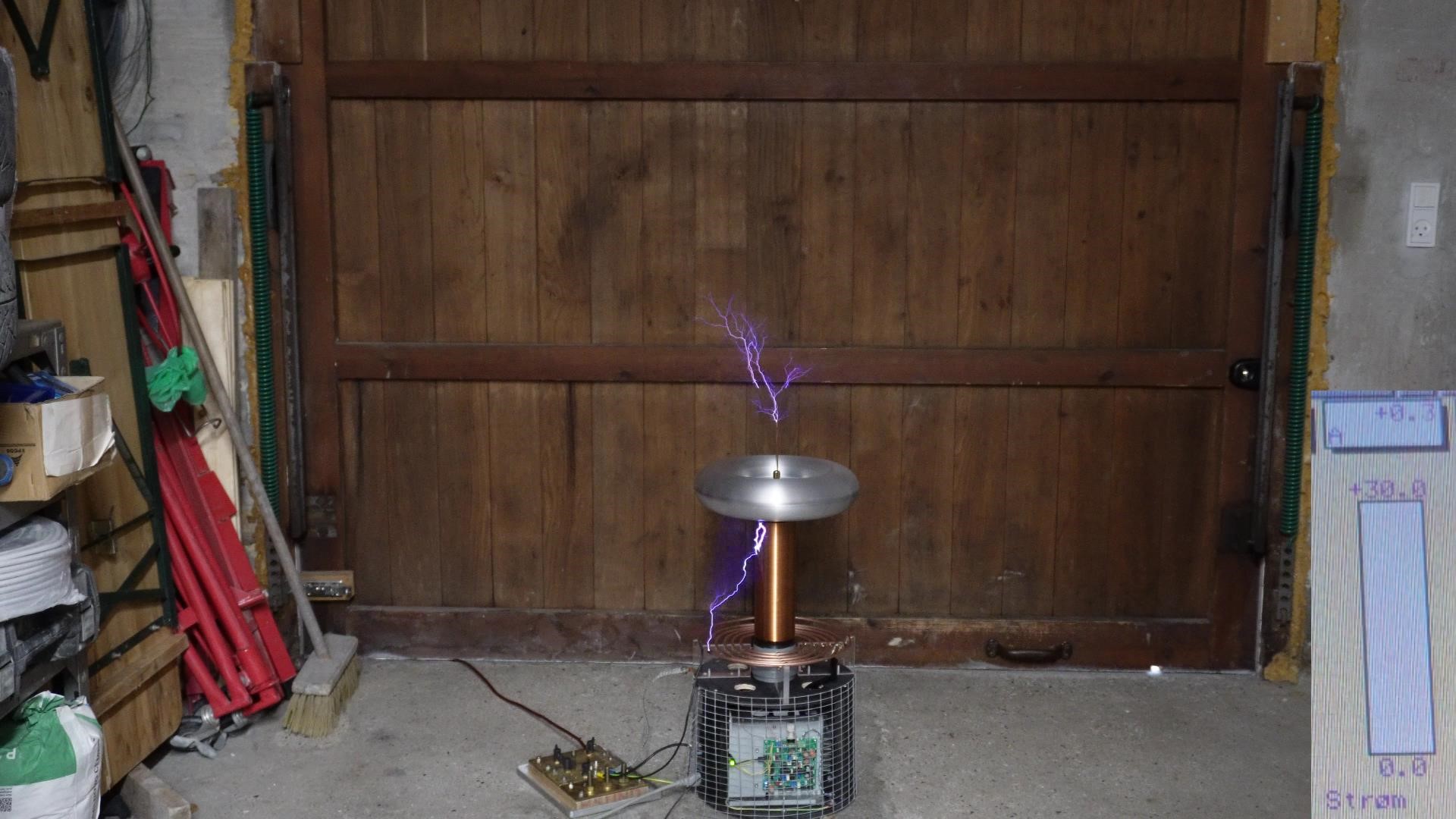
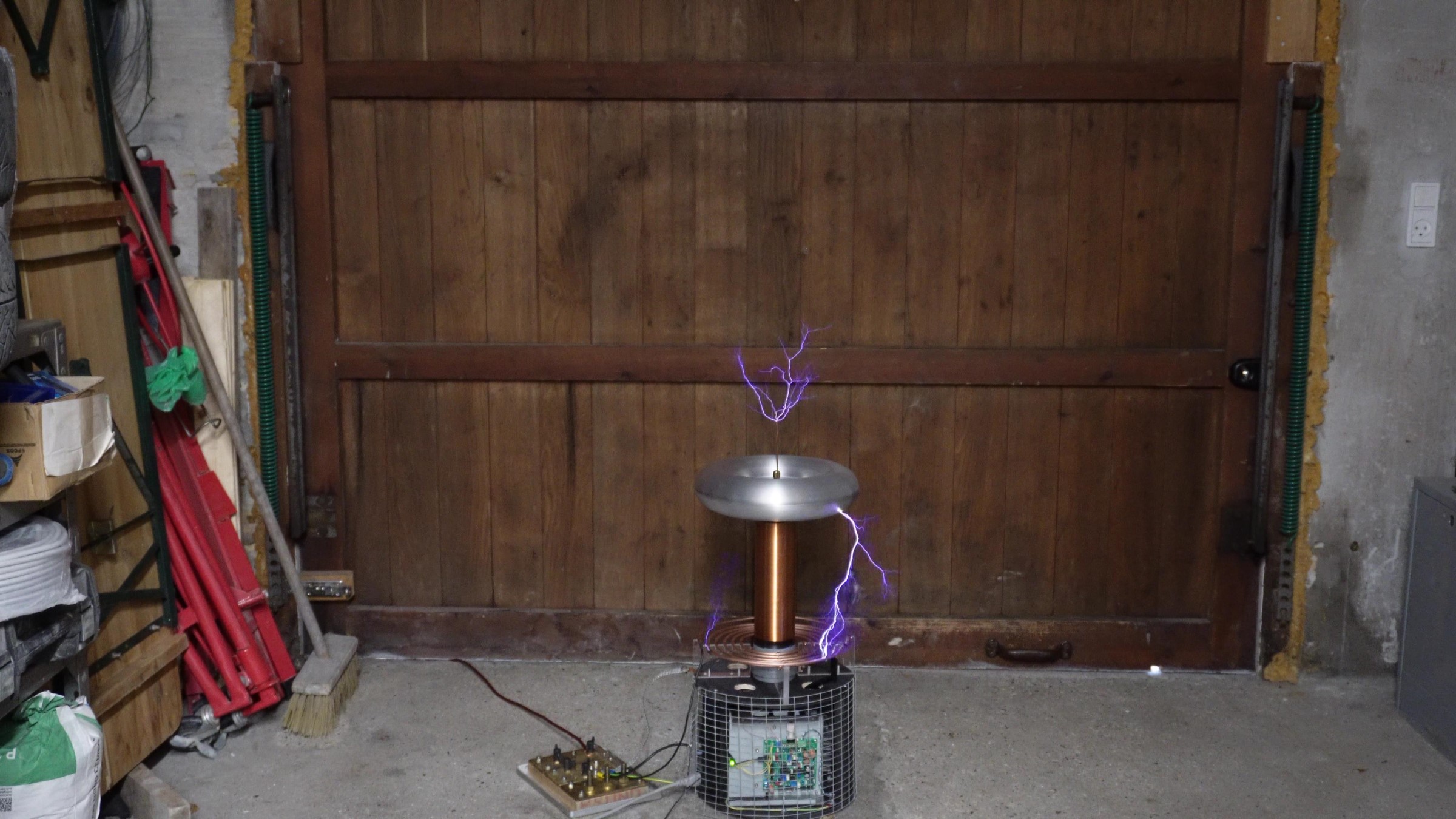
First sparks, lightning bolts and MIDI music played on the Tesla coils. Both the FGL40N120AN TO-247 and 2MBIN50-120 brick IGBT based inverters perform well with around 60-70 cm long sparks! There is still issues like racing sparks, fine tuning of OCD setting and removing sharp points around the primary coil, strike rail and protective shielding, in order for them both to run perfect.
This is the 7th article / video in the series of designing and building a DRSSTC Tesla coil from scratch, with focus on being easy and cheap, for you to replicate. You can find the previous information in these articles:
- Designing A Complete DRSSTC Tesla Coil In 10 Minutes
- Building the 10 Minute DRSSTC Part 1: Finding the Components
- Building the 10 Minute DRSSTC Part 2: Construction and Assembly
- Testing the 10 Minute DRSSTC Part 1: UD2.9 Driver and DC Bus Capacitors
- Rebuilding the 10 Minute Design DRSSTC, Static Test and Phase Lead Adjustment
- Rebuilding the 10 Minute Design DRSSTC: No More TO-247 IGBTs
DRSSTC Detail Pictures
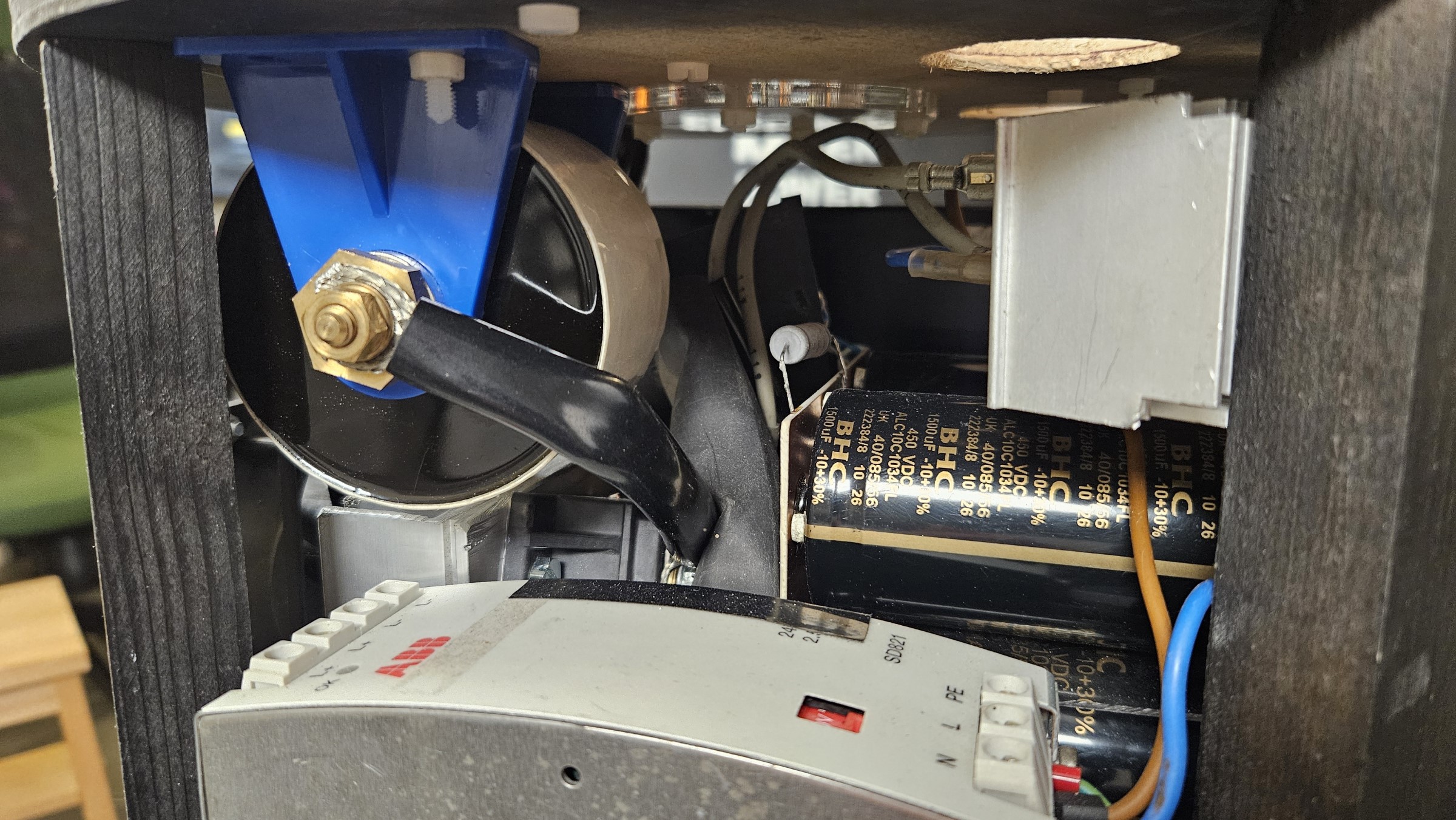
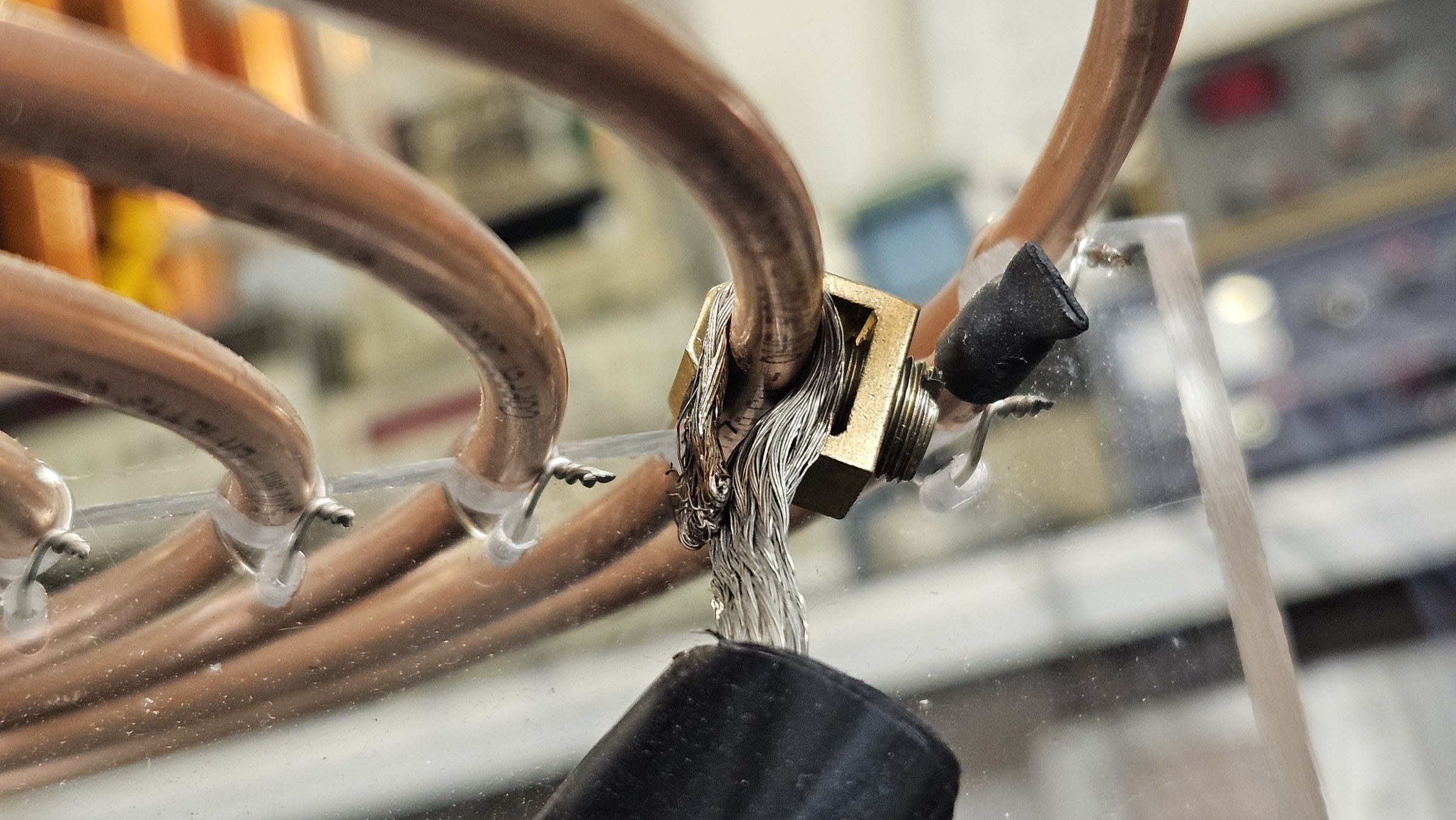
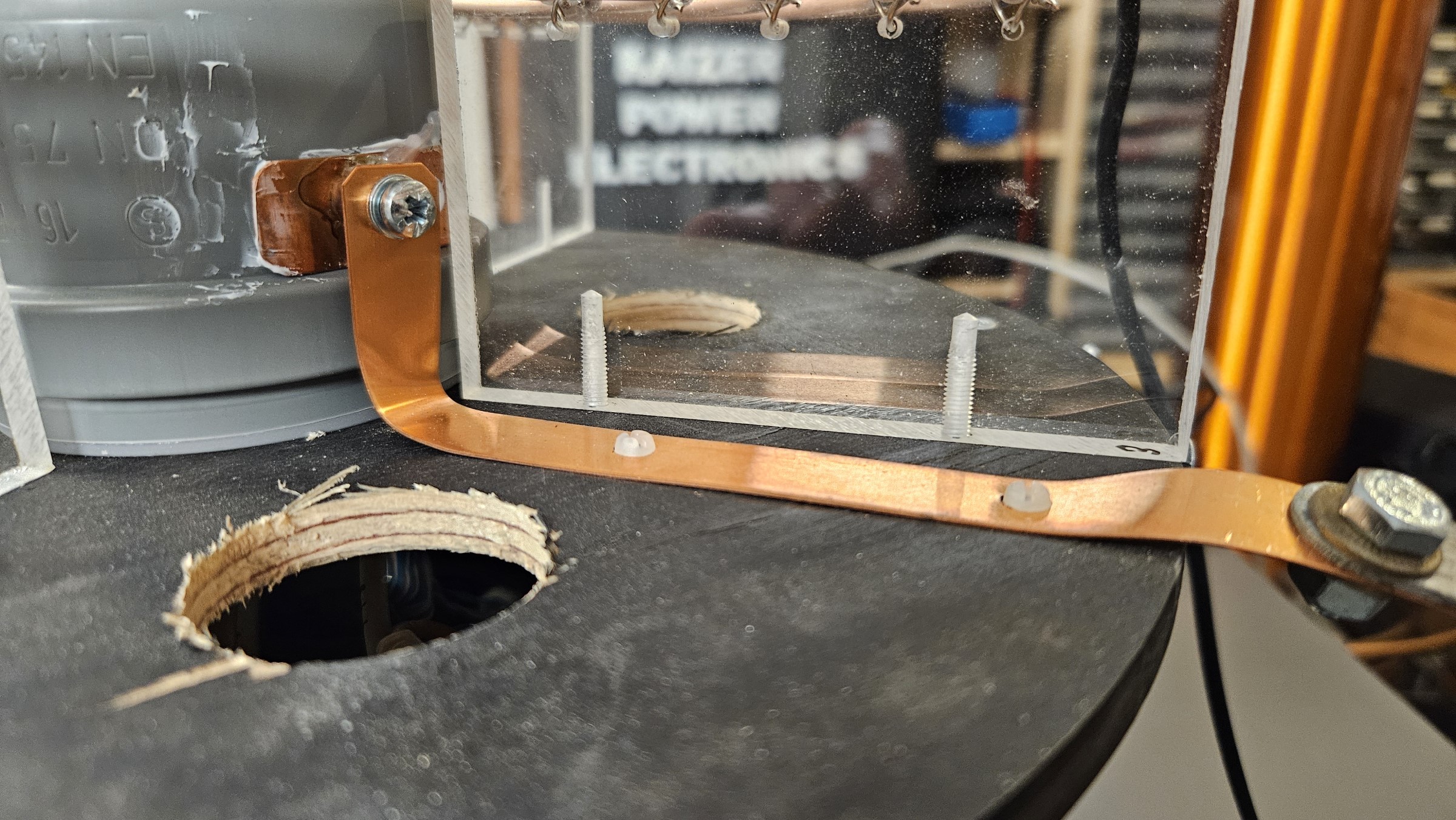
RF Grounding and Protective Earth
With my electrical background, all grounding is used as protective earth, a place to lead off a fault current and trip a Residual Current Detector (RCD). In Tesla coils we have a need for a RF ground, a place to ground our high frequency alternating high voltage. Without a ground, we can not control where sparks are formed and it might as well produce sparks from the bottom of the secondary coil to the primary coil.
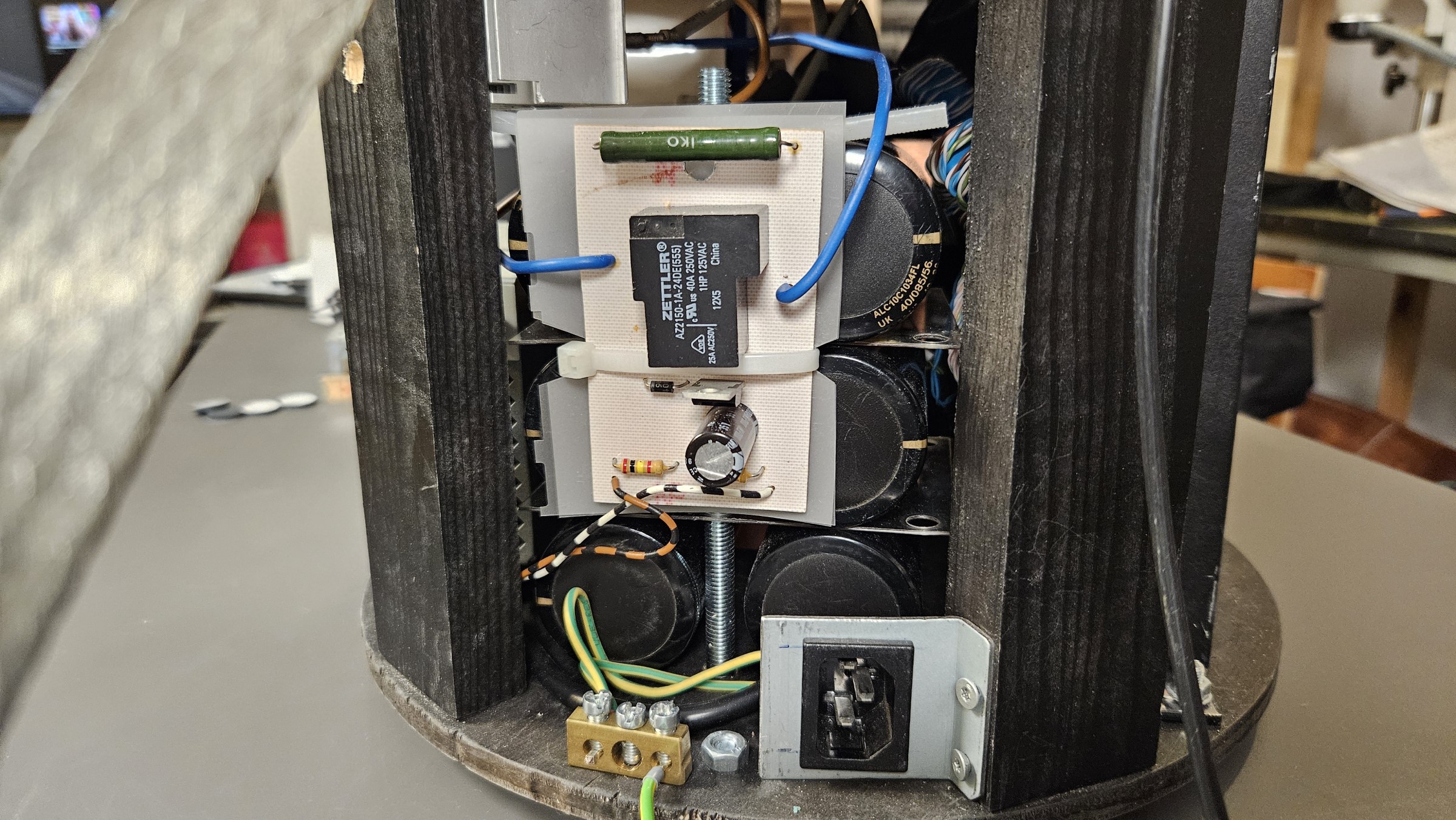
This poses a several issues with pros and cons. We would not want to mix these two grounds in regard to EMI issues on the mains wiring of the supply. On the other hand we do not want potential differences between two ground potentials, as this can lead to flash overs, which can be even worse than a baseline noise level, as its high peaks when it flashes. From a human safety perspective, I will connect all grounds together, but in a certain way to control RF current flow through selection of impedance in the difference ground wires.
The RF ground needs flat, wide or other large surface conductors with a low impedance at the resonant frequency. The RF current does not penetrate the conductor very deeply due to the skin effect. Safety ground that is never meant to conduct current, but to even out potentials, and only conduct if hit by mistake, should be thin wires with a high impedance. By this logic we should have minimized the risk of RF currents going backwards into the power supplies or controllers, and go straight for the ground where resistance is the smallest.
Spark Length of the DRSSTC
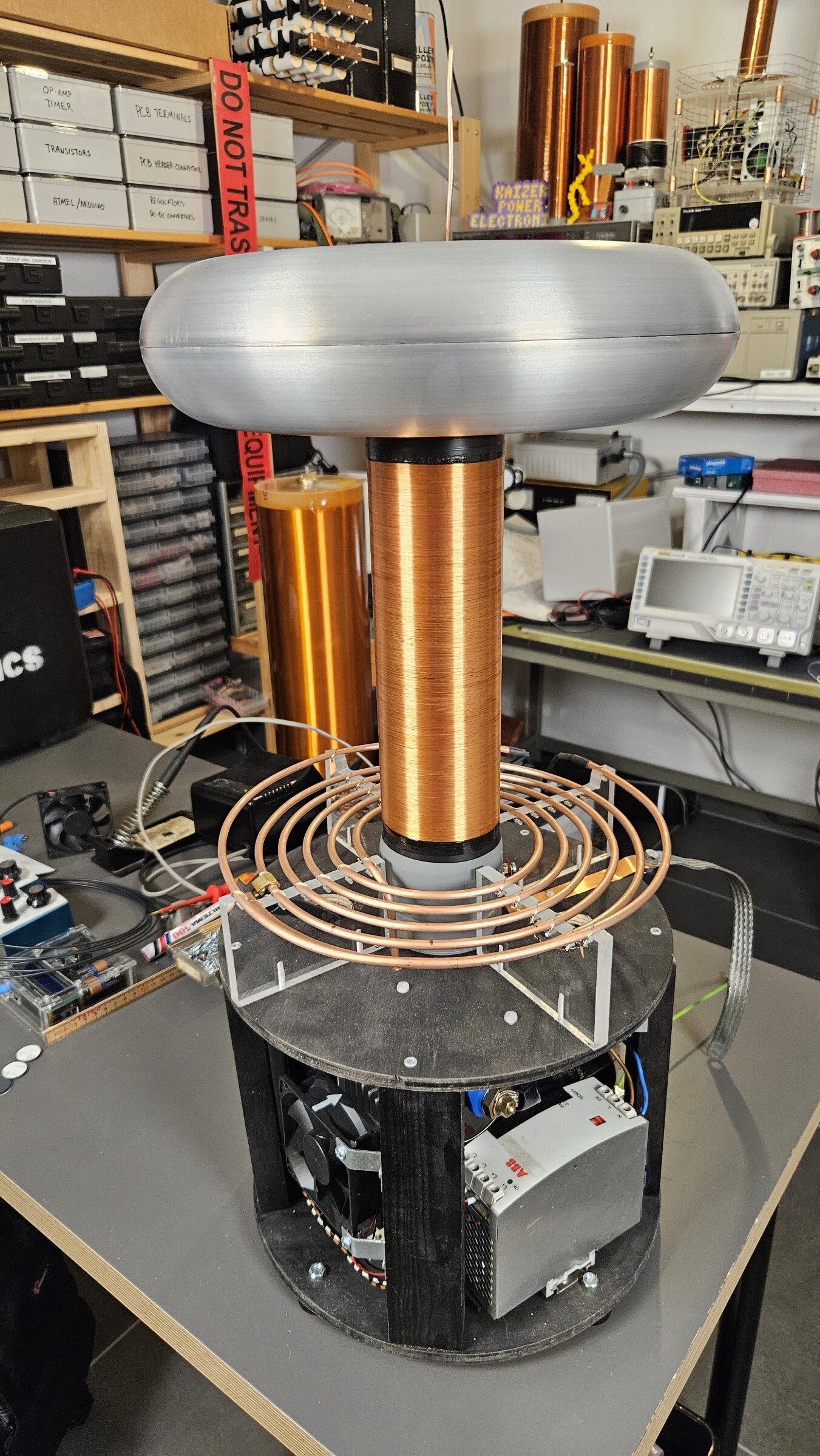
Spark length is estimated from screenshots of the video. The total Tesla coil height is 62 cm and from this ratio, the sparks have shown to be up to around 70 cm, doing MIDI playback. This is from the initial tuning point, no additional tuning experimentation was done during these video recordings.
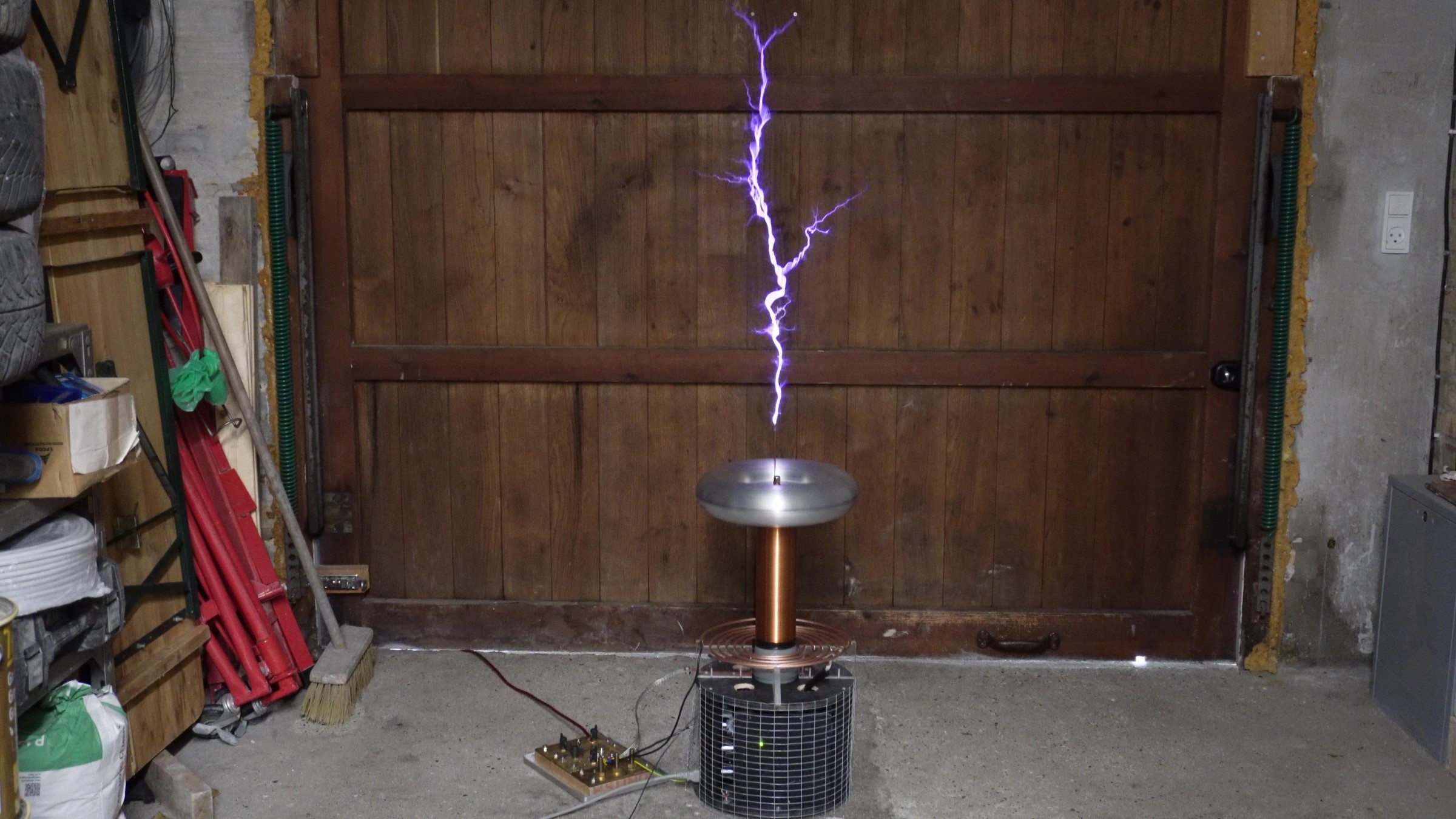
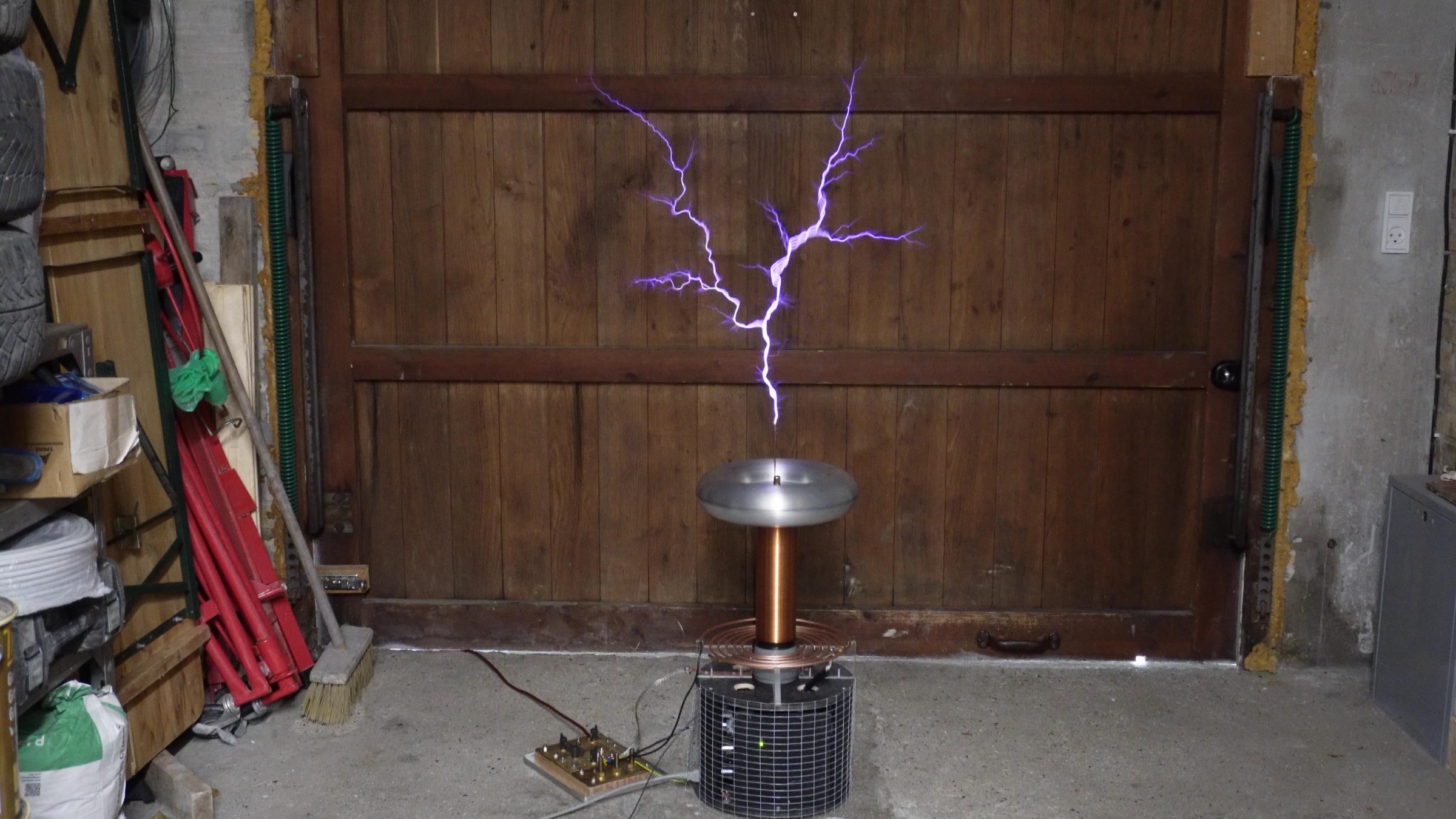
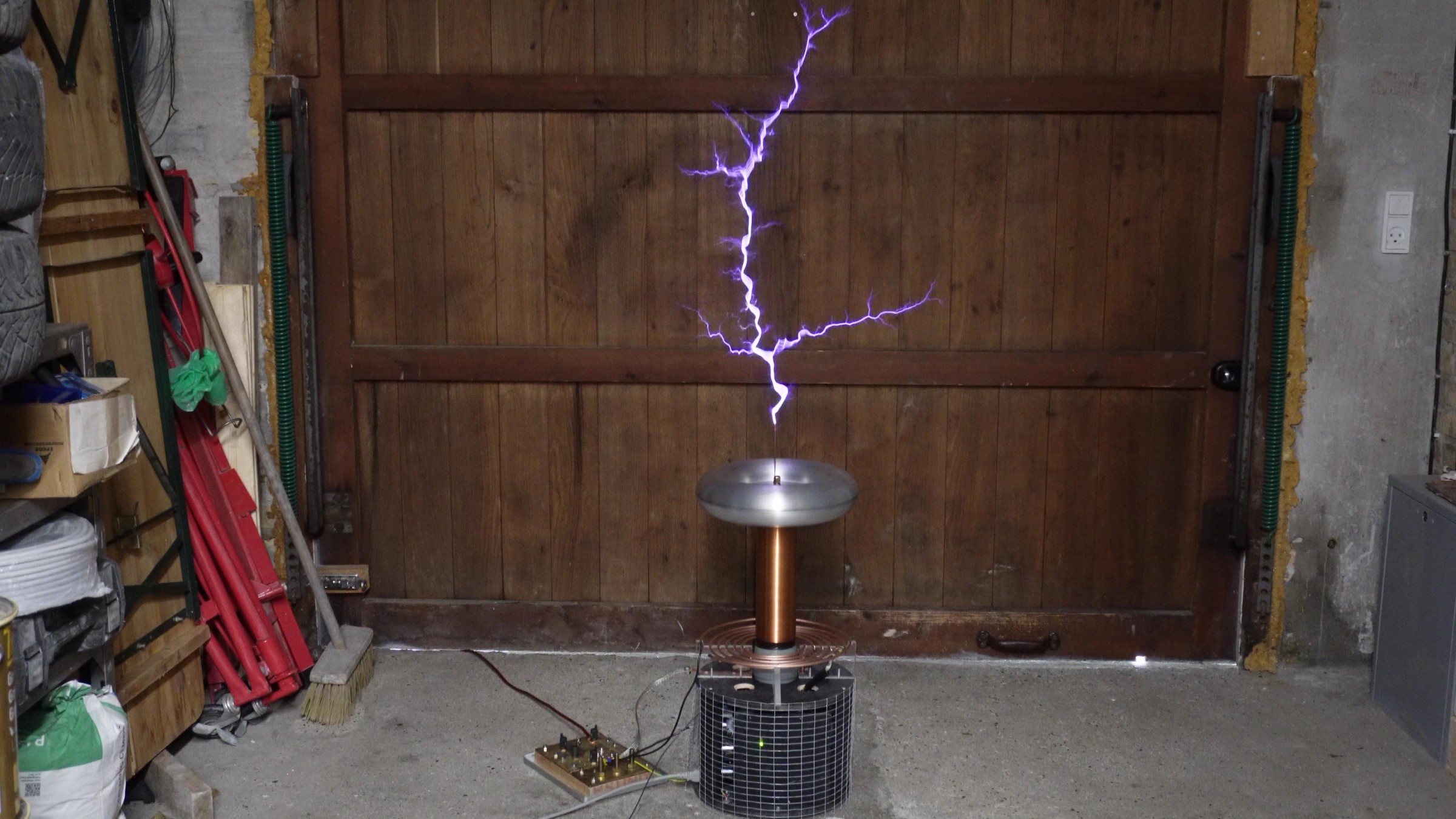
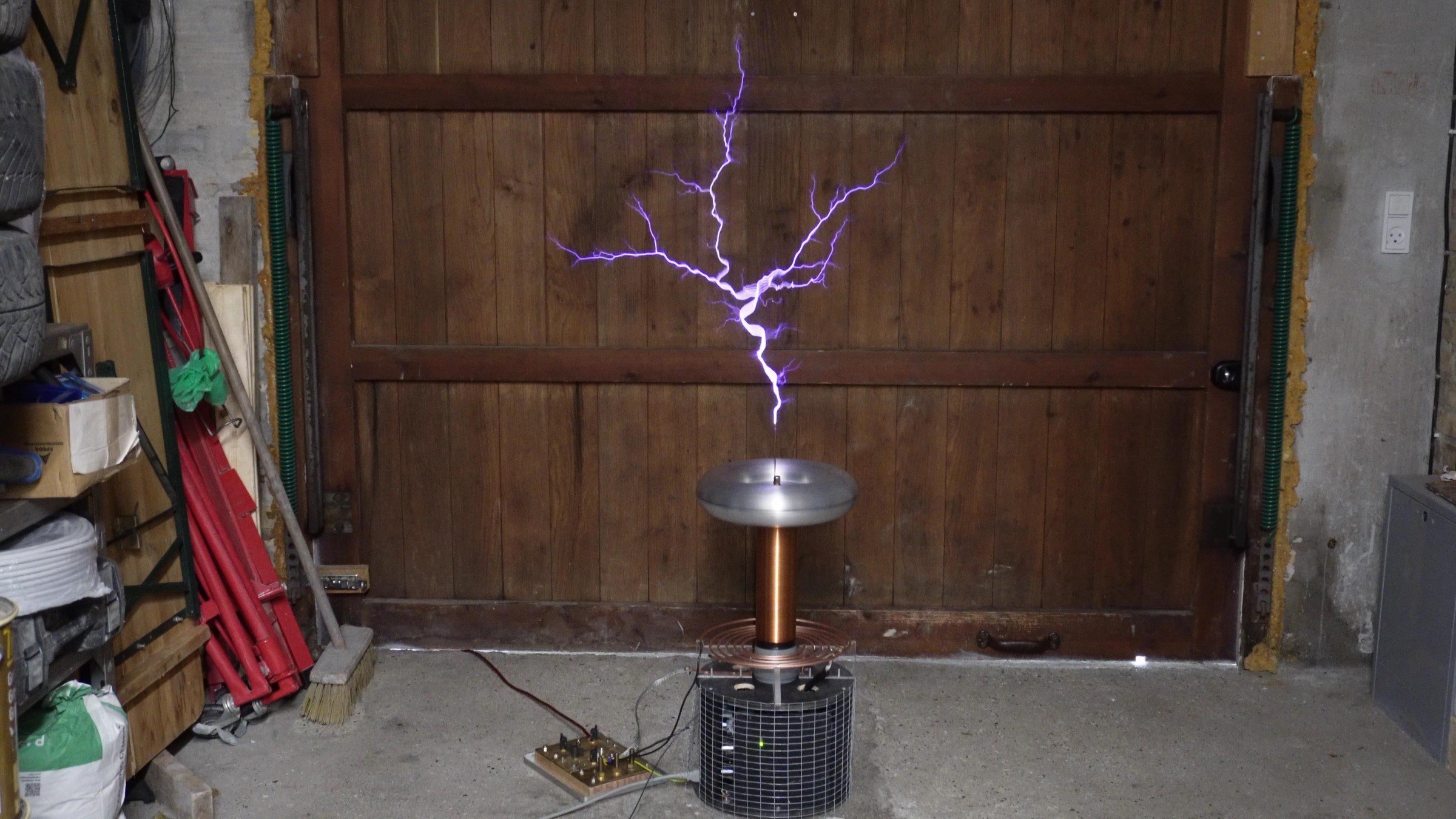
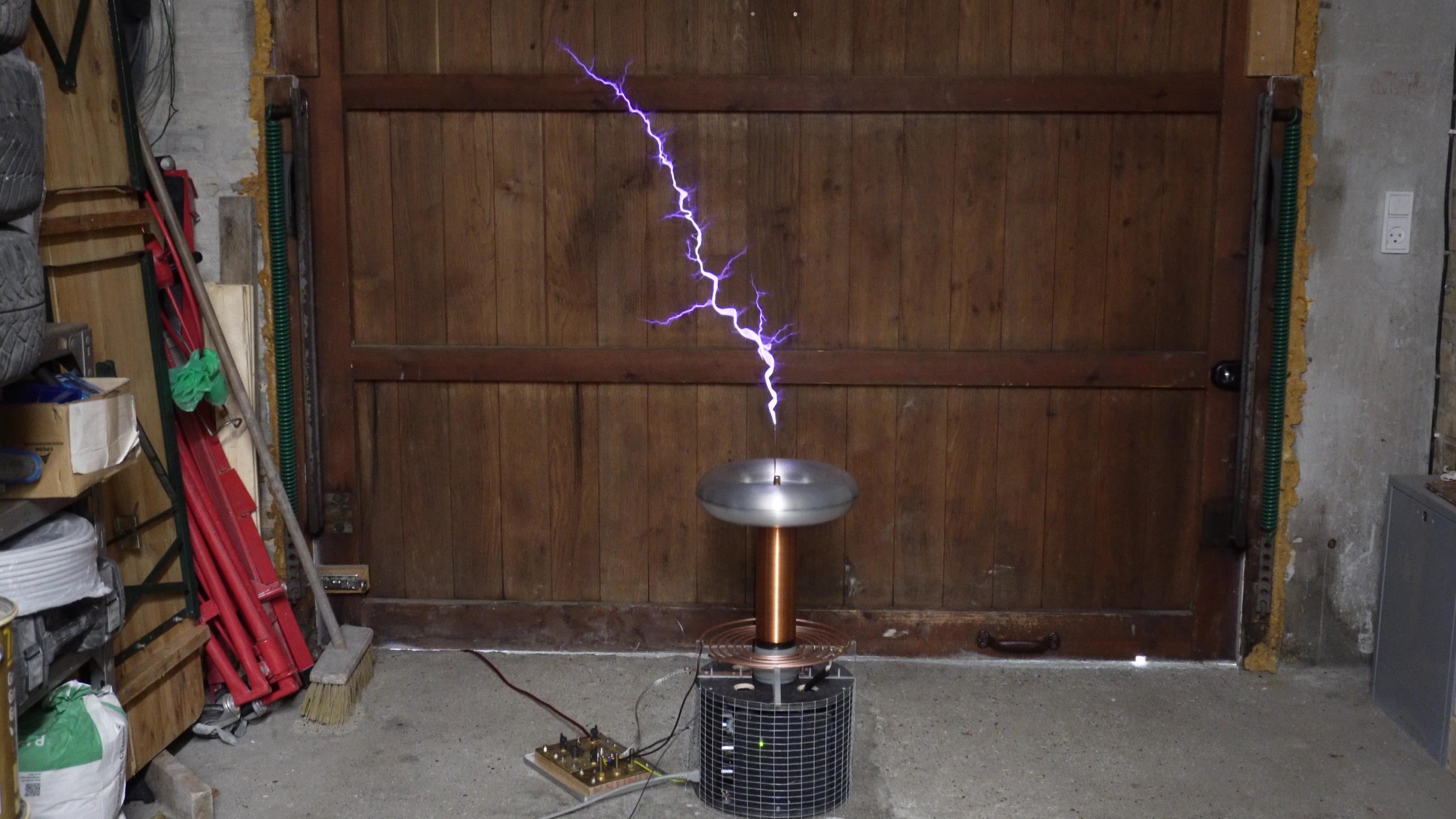
Power consumption was at peak measured to 3.3 A average current draw from 230 VAC mains, giving approximately 750 Watt power draw from the wall. This is a satisfying result and perfect from the design goal of being able to run the coil inside a house. With normal ceiling height of 230 cm in Denmark, the Tesla coil is 62 cm + 10 cm breakout point and 70+ cm sparks, giving a total working height of 142 cm. A safety radius on the coil should be the double of spark length, so run this Tesla coil with a sidewise breakout point, in a minimum 280 cm diameter safety zone to humans and animals.
DRSSTC OCD Setting Adjustment
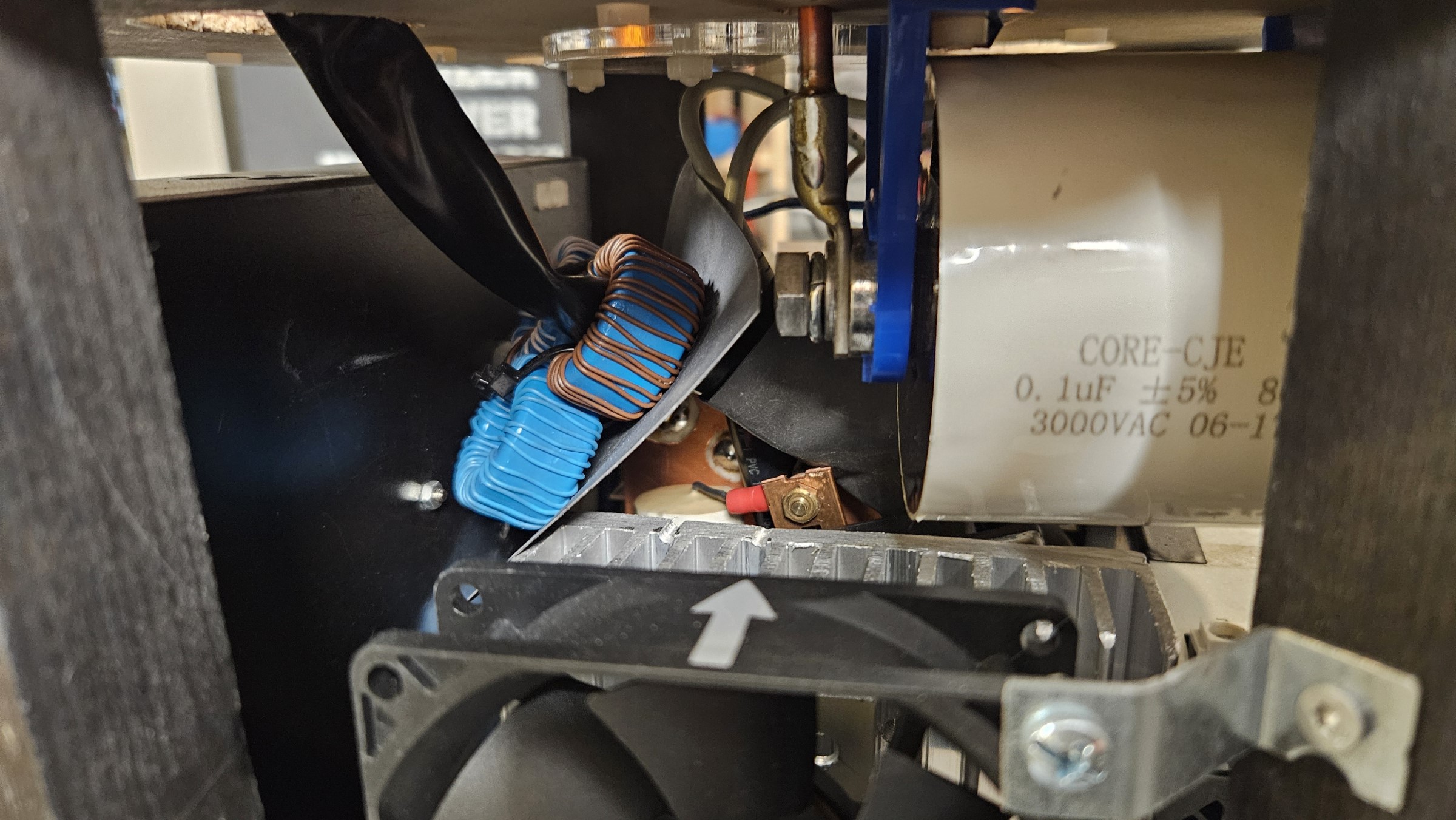
Adjusting the OCD level on UD2.9 is done by turning the 10 turn potentiometer anti-clockwise to increase the limit and clockwise to lower the limit. The initial setting for the TO-247 based coil was set at 250 Ampere and turned out to bee too little to produce long sparks. Turning it 3 turns anti-clockwise should in theory increase the limit to 400 Ampere primary peak current allowed.
Racing Sparks and Sharp Points
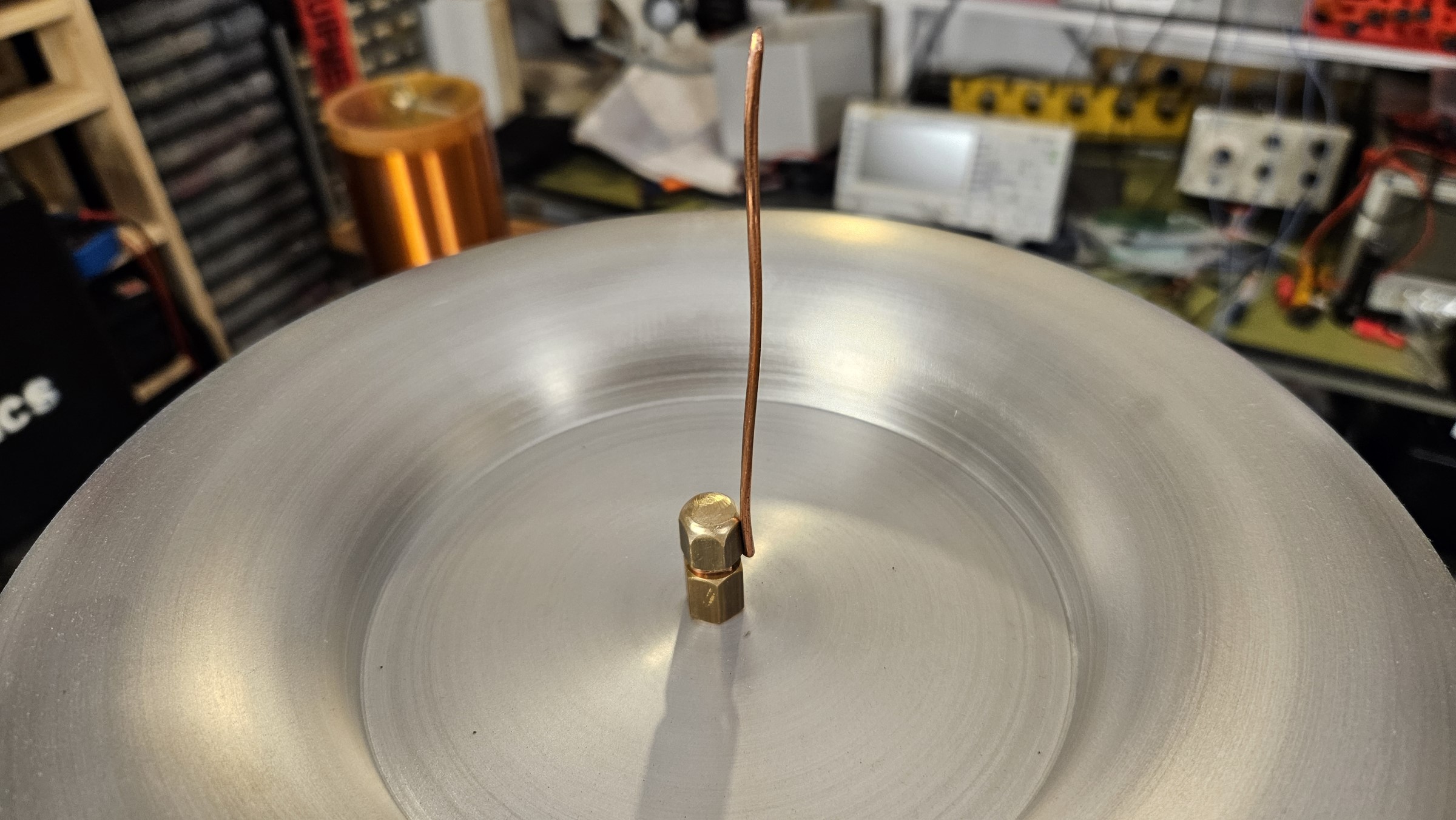
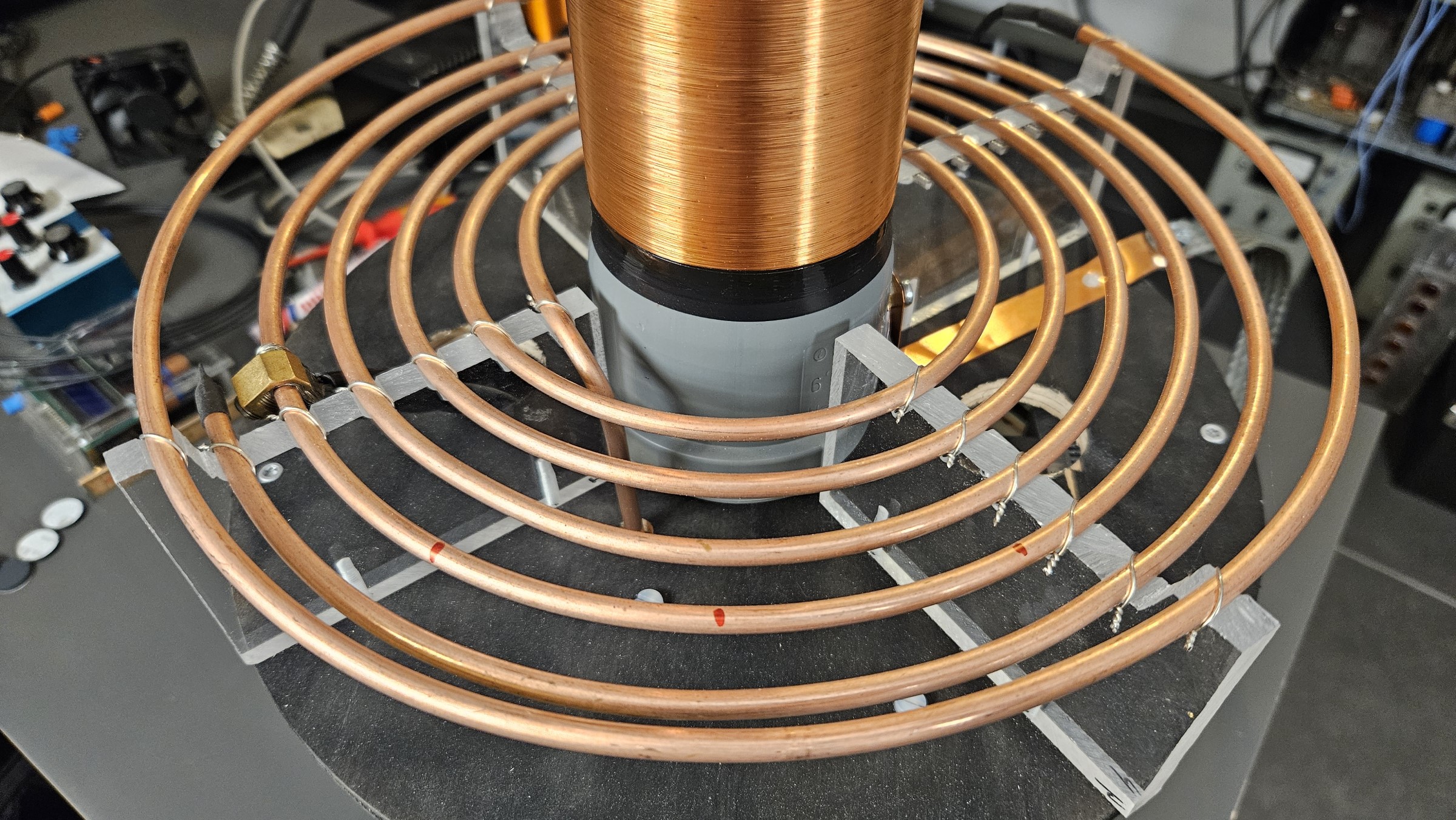
The TO-247 based DRSSTC have some serious issues with racing sparks, resulting from sharp points on the strike rail and properly also some from the large diameter copper wire that was used to secure the primary coil / strike rail.
I never added a solder blob on these sharp points and the worst part seems to be end of strike rail not being rounded off after cutting it. The smaller gauge copper wire used to secure the same elements on the brick based coil, seems to perform much better. The best solution would be to find a non-conductive alternative, like wire bundle bonding string.